
When I received this email, I immediately thought of Second Life and it's users.
From my email inbox:
Internet Evolution is about to embark on a truly groundbreaking new video project, and I wanted to see if you would like to get involved.
We're looking to create a video case study about a company embarking on
an important new IT project in the second half of this year.
However, unlike most case studies (which take place after the fact) our
case study will follow the project from planning, through
implementation, to trouble shooting and completion.
Projects that we are highly interested in covering include: cloud
computing; analytics; social media in a business environment; security;
or an upgrade to a company's computing and middleware systems.
The core of the case study will be three short (five minute)
documentaries covering the before, during, and after of your project.
These documentaries will be filmed by our professional film crew on
location at your company premises at a time that is convenient to you.
Each one takes about a morning to film.
We'll also outfit you with a video camera and the training required to upload occasional project updates.
The purpose of the case study is to highlight the great work that IT
professionals such as yourself do every day. Our goal is to highlight
your success for others to learn from. And, of course, as well as making
you a star (and a corporate hero!) we'll also compensate you for your
time.
Interested? Please drop me a line at ferraro@internetevolution.com if you would like to know more about this exciting new Internet Evolution project!
Sincerely,
Nicole Ferraro
Executive Editor, Internet Evolution
Showing posts with label Documentary. Show all posts
Showing posts with label Documentary. Show all posts
Thursday, July 14, 2011


Tuesday, April 6, 2010
PBS Frontline Digital_Nation, Rachel Dretzin, and Douglas Rushkoff Present: *Distracted by Everything*
Does the Internet promote freedom of expression and communication, making it a catalyst for democracy and activism? Is the net tilted towards Democracy and participatory society? Meanwhile, do services like Facebook and Twitter encourage virtual and superficial involvement over dedication to the kind of activism that makes a difference? Does it just take people off the streets, blogging safely in their homes where they no longer threaten repressive regimes?
Digital Nation – Life on the Virtual Frontier (2009 – 2010) is a documentary film by Rachel Dretzin and Douglas Rushkoff that thematizes the media issues in the context of our virtual lives, tech development, networking and multitasking.
Chapter 1: Distracted by everything. M.I.T. students are among the world’s smartest and most wired. They constantly multitask with their tech tools.
Chapter 2: What’s it doing to their brains. Tests given Stanford’s multitaskers yield troubling discoveries. Other research into Net use and the brain raises more questions.
Chapter 3: South Korea’s gaming craze. Some cautionary lessons from a country where Internet addiction has become a health crisis.
Chapter 4: Teaching with technology. Teachers are embracing digital media–’it keeps students engaged; new skills are needed for a new age.’ But is there a catch?
Chapter 5: The dumbest generation? The debate has just begun on whether we are losing as much as we’re gaining in 24/7 wired world.
Chapter 6: Relationships. Millions of people are inhabiting the Net as it were a real place, satisfying the urge to connect to others in online games, virtual worlds.
Chapter 7: Virtual worlds. Second life offers a totally new reality for humans, says it’s creator–and IBM has begun shifting it’s meetings into this virtual space.
Chapter 8: Can virtual experience change us? The U.S. military is using virtual spaces for PTSD therapy and for flying drones in Iraq while based in a room in Nevada.
Chapter 9: Where are we headed? A school is organized around learning through video games–may be it’s students are getting something we aren’t yet able to measure or recognize.
[Thanks Body Pixel]
Digital Nation – Life on the Virtual Frontier (2009 – 2010) is a documentary film by Rachel Dretzin and Douglas Rushkoff that thematizes the media issues in the context of our virtual lives, tech development, networking and multitasking.
Chapter 1: Distracted by everything. M.I.T. students are among the world’s smartest and most wired. They constantly multitask with their tech tools.
Chapter 2: What’s it doing to their brains. Tests given Stanford’s multitaskers yield troubling discoveries. Other research into Net use and the brain raises more questions.
Chapter 3: South Korea’s gaming craze. Some cautionary lessons from a country where Internet addiction has become a health crisis.
Chapter 4: Teaching with technology. Teachers are embracing digital media–’it keeps students engaged; new skills are needed for a new age.’ But is there a catch?
Chapter 5: The dumbest generation? The debate has just begun on whether we are losing as much as we’re gaining in 24/7 wired world.
Chapter 6: Relationships. Millions of people are inhabiting the Net as it were a real place, satisfying the urge to connect to others in online games, virtual worlds.
Chapter 7: Virtual worlds. Second life offers a totally new reality for humans, says it’s creator–and IBM has begun shifting it’s meetings into this virtual space.
Chapter 8: Can virtual experience change us? The U.S. military is using virtual spaces for PTSD therapy and for flying drones in Iraq while based in a room in Nevada.
Chapter 9: Where are we headed? A school is organized around learning through video games–may be it’s students are getting something we aren’t yet able to measure or recognize.
[Thanks Body Pixel]
Saturday, January 30, 2010
Frontline: Digital Nation - 90 minute Documentary airs Tuesday, February 2nd

This unprecedented FRONTLINE project tackles what it means to be human in the digital age, from the way we think, work, interact and connect to the way we fight wars. We visit lots of places -- labs performing fMRIs on heavy multitaskers to a wired middle school in the south Bronx; an internet addiction boot camp in Korea to a massive American corporation holding meetings via avatars; a controversial Army recruiting center outside Philly to an Air Force base in the Nevada desert where pilots fly planes remotely.
We have an extremely rich and robust website, full of content we've been gathering over the past eighteen months as well tons of videos sent in by people across the globe. It's unlike any FRONTLINE website before, and we hope you can check it out after the broadcast. Douglas Rushkoff, one of our correspondents, will be hosting an online roundtable with many of the people you'll see in the documentary. We'll also continue to update the site with fresh video, and as always we invite any and all comments about any part of the site or the documentary. pbsdigitalnation.org
Cheers,
Ark Media
Wednesday, January 13, 2010
Life 2.0 - Documentary about Second Life premieres at Sundance 2010
Sundance 2010 Preview: LIFE 2.0
by Kirk

Second Life launched in June of 2003. Since that time, tens of millions of people across the planet have created alternate realities of themselves, sometimes more realistic than others.
Documentary film maker and journalist Jason Spingarn-Koff delves deep into this subculture of the world’s population, creating a documentary where all the characters are chunks of 1s and 0s interacting with one another. Sounds fascinating to say the very least.
Official synopsis:
Every day, across all corners of the globe, hundreds of thousands of users log onto Second Life, a virtual online world not entirely unlike our own. They enter a new reality, whose inhabitants assume alternate personas in the form of avatars—digital alter egos that can be sculpted and manipulated to the heart’s desire, representing reality, fantasy, or a healthy mix of both. Within this alternate landscape, escapism abounds, relationships are formed, and a real-world economy thrives, effectively blurring the lines between reality and “virtual” reality.
Director Jason Spingarn-Koff digs deeply into the core of basic human interaction by assuming his own avatar and immersing himself in the worlds of Second Life residents, whose real lives have been drastically transformed by the new lives they lead in cyberspace. In doing so, he manages to create an intimate, character-based drama that forces us to question not only who we are, but who we long to be.
by Kirk
Second Life launched in June of 2003. Since that time, tens of millions of people across the planet have created alternate realities of themselves, sometimes more realistic than others.
Documentary film maker and journalist Jason Spingarn-Koff delves deep into this subculture of the world’s population, creating a documentary where all the characters are chunks of 1s and 0s interacting with one another. Sounds fascinating to say the very least.
Official synopsis:
Every day, across all corners of the globe, hundreds of thousands of users log onto Second Life, a virtual online world not entirely unlike our own. They enter a new reality, whose inhabitants assume alternate personas in the form of avatars—digital alter egos that can be sculpted and manipulated to the heart’s desire, representing reality, fantasy, or a healthy mix of both. Within this alternate landscape, escapism abounds, relationships are formed, and a real-world economy thrives, effectively blurring the lines between reality and “virtual” reality.
Director Jason Spingarn-Koff digs deeply into the core of basic human interaction by assuming his own avatar and immersing himself in the worlds of Second Life residents, whose real lives have been drastically transformed by the new lives they lead in cyberspace. In doing so, he manages to create an intimate, character-based drama that forces us to question not only who we are, but who we long to be.
Thursday, December 10, 2009
NYC - The Film of Warp20 (New York)
Live performances, interviews and animated surprises from Battles, Jamie Lidell, Flying Lotus, !!!, Clark, Hudson Mohawke, The Hundred In The Hands, Born Ruffians and Pivot. Directed by Lorenzo Fonda and produced by Warp Films/Mighty8. In loving memory of Jerry Fuchs.
Doubledown note: My apologies if your country blocks viewing this video. Contact me (use any of the methods on the right side of my blog) and I will make sure to get you this video.
Thursday, June 25, 2009
Virtual World Documentary "Another Perfect World" Premiers
Another Perfect World
Jorien van Nes and Femke Wolting's fascinating insight into online virtual worlds where the user can create their own paradise, far removed from real life.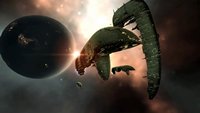
UPDATE: Video on Youtube now posted:
True Stories presents: Jorien van Nes and Femke Wolting's fascinating insight into online virtual worlds. Second Life, World of Warcraft, Metaplace, U World - all virtual worlds where the user can create their own paradise, far removed from real life. People can create societies that range from the democratic to the dictatorial, have avatars that resemble their ideal and can engage in actions that their real life personality would never dream of doing, from cyber-sex to virtual crime. But who creates these worlds and are they the right people to be crafting idealized societies that pretend to address and solve the inadequacies of the real world?
Subscribe to:
Posts (Atom)