What if every underground artist had a way to see what DJs are playing their tracks in the clubs? What if they could not only see who’s playing their tracks, but could see what time the DJ played their track, what country, and even got a message the minute their track was dropped in the club? And even better, what if the artist could actually get PAID for their track getting played? Thanks to a new technology called Twitter DJ this is all possible now.
This is a free interpretation of Cracklin Rosie, played on 2 Android devices, 2 Windows Mobile devices and 1 iPod Touch. More info on http://blog.stef.be/phoneguitar
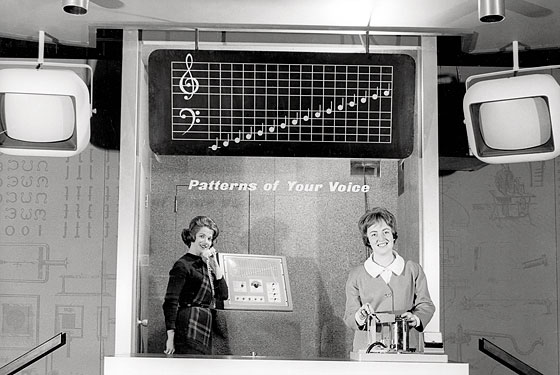
If you've listened to pop music in the past 40 years, you've probably heard more than a few songs with a robotic sound. That's thanks to the vocoder, a device invented by Bell Labs, the research division of AT&T. Though the vocoder has found its way into music, the machine was never intended for that function. Rather, it was developed to decrease the cost of long-distance calls and has taken on numerous other uses since.
Music journalist Dave Tompkins has written a book about the vocoder and its unlikely history. It's called How to Wreck a Nice Beach: The Vocoder From World War II to Hip-Hop.
Tompkins says the machine played a significant role in World War II. After the U.S. government discovered that Winston Churchill's conversations with Franklin D. Roosevelt were being intercepted and deciphered by the Germans, it decided to invest in speech-encoding technology. So the National Defense Research Committee commissioned Bell Labs in 1942 to develop a machine — and Bell Labs delivered.
The vocoder wasn't without its flaws. Intelligibility of speech sometimes proved a problem, but Tompkins says pitch control was a bigger concern.
"They didn't mind world leaders sounding like robots, just as long as they didn't sound like chipmunks," he says. "Eisenhower did not want to sound like a chipmunk."
Filmmaker Brett Gaylor explores issues of copyright in the information age, mashing up the media landscape of the 20th century and shattering the wall between users and producers.
Ever popular than ever I’m proud to bring another in my series of “Who’s the Band” and this week I bring you an interview with Brad Reason, so I’m going to stop rambling on and get on with the interview..
Q: So how did you come upon the name of your band? Is it the first name you chose?
A: I stuck with my name, Brad Reason. Then there was a time where I was doing a lot more DJ work, so I decided to pick a DJ name, and I went with DJ Doubledown. I loved the movie “Swingers” so I went with Doubledown. When I entered Second Life to begin my virtual world performance career, I used the first name Doubledown, and then at registration, I was given the option of several last names. I picked Tandino. So, my name became Doubledown Tandino in the virtual world, Second Life. In the real world, I stick with Brad Reason.
Q: Tell us a little about yourself?
A: I’m Brad Reason, solo-artist. I am a digital electronic music composer, producer, editor and remixer. I have collaborated with many other musicians, singers, and music artists over the years as well.
Q: So what genre of music would you say you are in and who are your major influences?
A: I create all forms of instrumental and electronica music which includes house, breakbeat, drum-n-bass, trip-hop, chillout, nujazz, avant-garde, and experimental.
My influences stem from The Chemical Brothers, Prodigy, Air, Talvin Singh, Medeski Martin & Wood, jazz legends such as Miles Davis and Coltrane, and funk legends such as Commodores, Ohio Players, and James Brown
Q: How long have you been performing/producing music? What inspired to to produce your style of music?
A: I began creating music on computer in 1996 with now ancient spread-sheet based sampling software . By 1997 I was creating music and sharing with with like minded communities on the internet.
Q: Are you signed to a record label (Indie or major)?
A: I am not signed by any record label, but I have had some of my individual tracks signed and released through a label or distribution company.
Q: Have your ever performed live? If so where and to how many?
A: I’ve performed live non-stop since I started. A lot of the shows I do are also DJ based, so I mix DJing with original music and remixing. From 2000-2006 I was DJing on the East Coast of USA, primarily in Baltimore, Maryland. From 2006 to current, I perform live online to people across the world through virtual worlds such as Second Life.
Q: Who writes/produces the music and/or lyrics to your tracks?
A: I create and compose everything I make.
Q: How would you describe your music-making process?
A: I have no process. I simply either get in the mood to create some music, or I have some sounds or beats in my head and I want to lay them out and record.
Q: What has been your biggest challenge as an artist? Have you been able to overcome that challenge? If so, how?
A: I wouldn’t say I have had many challenges. If anything, I would say that it is sometimes tough to stick within one mainstream style. Usually I like to push the boundaries of music, and make what isn’t the normal standard. I like to create what I want to hear, which may not be considered a mainstream hit. Sometimes, it is tough to garner a large fan base because each of my music pieces is so varied in style and genre.
Q: What’s your ultimate direction for your band? Are you seeking fame and fortune?
A: Not at all. I have no interest in fame and fortune. I simply want people to listen, appreciate, and respect my music as art.
Q: What advice do you have for people who want to form their own bands?
A: Stop waiting around and thinking about it. Just start!
Q: How can fans-to-be gain access to your music? Do you have a website with sample songs or a demo CD?
A:http://reverbnation.com/BradReason for over 90 of my original tracks. Currently I am running a contest. I am giving away my not-yet-released new 2010 album for free. The top 5 people that listen to the most songs on my page between now and March 15th will receive the digital copy of my new album.
Q: Is there anyone you’d like to acknowledge for offering financial or emotional support?
A: I would like to thank all of the Second Life music performers, supporters, and fans. The live music community in Second Life is thriving, and without their constant daily support, I would not have been able to maintain performing live in SL for so long. Also the inspiration for the tunes on my new album came entirely from my experiences in Second Life.
That's right! I, Brad Reason, am giving away my new 2010 album release "Multiple Worlds."The new album is currently not released and not available to the public.
Over the past few years, I have been performing live into the virtual world known as Second Life under the name Doubledown Tandino. Through my experiences and exploration inworld, I have created instrumental electronic music inspired by this immersive environment.
14 original tracks by Brad Reason (with one collaboration track by Slim Girl Fat). The music styles include eclectic electronica, nujazz breakbeat, house, drum-n-bass, intelligent dance music, avant-garde, & experimental.
The contest is simple: Listen to my tunes at http://reverbnation.com/BradReason The FIVE people that listen to the most tunes between now and March 15th will receive the digital album release "Multiple Worlds" for FREE. The album comes in digital MP3 format and will be delivered straight to your email inbox. FIVE people will receive my unreleased new album for free simply by listening to music.
Below, is the tutorial on how to create a piece of "music" using AutoTune. Spoiler alert: If you watch this tutorial and use autotune for creating your music, not only will your artistic integrity be sucked out of your immortal soul within seconds, but also a cute puppy dies.
I posted this video, to simply show the educational value... but I highly advise against actually creating your own music this way. People... autotune... it's pathetic. It sounds like trash, and it provides the key for listeners to instantly know you have no imagination or talent whatsoever. Don't do it... remember, puppies die.
"All forms of social media work. It just depends on how you use them." Brad Reason aka Doubledown Tandino
Brad Reason’s music career continues to flourish entwined with computer and Internet technology. He keenly demonstrates social media is about leveraging technology to connect, network, share, perform, promote, and learn. Most importantly, he shows discipline with these social media platforms is worth the effort! By Teddi Davis
Brad Reason, also known as Doubledown Tandino in Second Life® and other virtual communities, recently shared how the Internet helped him get his start, and how social media has advanced his career. Besides being an accomplished musician and DJ, Brad Reason is uniquely positioned to comment on social media’s usefulness and efficacy. Not only does he create, perform and DJ virtually live music, Brad’s also a new media marketing professional. In fact, he’s a full time social media, new media, and trending technology specialist. Since he spends 40 to 70 hours a week working with social media platforms, his experience and insights are sure to help other musicians make use of today’s most compelling promotional tools.
Brad began his music career over a decade ago. “At first, it was more about using my computer and sampling, than about creating music,” he said. “It was for my own personal enjoyment, and the intrigue.” Creating music with a personal computer was in its infancy. Brad started with a program called Impulse Tracker, which was a basic spreadsheet form of laying out sounds and samples. “As I was creating my first music,” Brad recalled, “the Internet was starting to blossom as well.” He started connecting with other PC musicians via forums and message boards. “Thanks to the Internet, we could share each other’s tunes, and swap samples–it was experimental, and avant-garde,” he recollected.
He was learning and growing by listening to other people’s music, and picking up tips and techniques from his virtual peers. Heavily into electronica at the time, Brad was influenced by Aphex Twin, Prodigy, Chemical Brothers, and Air among others. He began to appreciate he was on the cusp of something big because not only were the people around him beginning to listen to his tunes, there was a growing online community of other artists also experimenting.
When Brad decided to incorporate some of his compositions into a play he had written, he was stunned when he got his first request to purchase a CD. “I didn’t even have a burner,” he said. “I was in total shock that someone actually wanted to listen to the music I was creating.”
And then came the MP3.com Web site. Brad could now upload his music, and create CDs. “Once that site became popular, people around the world were listening, downloading, and buying my music,” he recalled. MP3.com was the first online location for sharing, and downloading music. “It was a social media community for music before the term ‘social media’ was even coined,” Brad noted. “You could technically consider that experience as the start of my use of social media.”
Even though MP3.com got into a legal tangle and is no more, we all know the concept stuck. Brad said he now uses sites like ReverbNation.com/BradReason and TheSixtyOne.com/Doubledown to share and sell his music. “New technology, new equipment, and new software followed–such as, ACID, Reason, Cubase, Protools, Ableton Live, Serato Scratch, and Native Instruments–and now,” he said “the possibilities for music making are limitless.” And so are the ways to connect with an audience.
Brad doesn’t use social media to communicate just with his fans, however. He also uses these tools to connect with venues and other music business contacts. As a new media marketing pro, Brad notes most venues are behind the times when it comes to social media. “Venues don’t realize the potential for using these tools for promotion and booking quality music acts,” he said. Not surprisingly, Brad finds venues are ‘very enthused’ that he expertly uses the Internet to both perform and promote. “I use social media to share my music, announce when I have created a new piece of music, announce my live shows, and connect with industry professionals.” He also uses social media platforms to house his portfolio, bio and resume, but Brad especially enjoys connecting with his fans. “I am happy to respond to comments, and keep the lines of communication two-way.”
Brad finds social media so successful, he now limits his use of other promotional tools. In the past, he used fliers, print media, and press releases, as well as posting event info at non-social media based Web sites. “Now, because I am very skilled at using social media to market, advertise, and promote, I use social media fully, and have no need to focus on print anymore.” Social media in tandem with CDs and business cards, with the occasional flier is all he needs now.
“I use FaceBook (for everything), Twitter (for real-time info spreading), LinkedIn (for professional networking), my blog, DJDoubledown.blogspot.com, to keep a portfolio of my work as well as share other people’s interesting concepts, Flickr (for photos and graphic designs), Reverb Nation (for my original music), Soundcloud (for my DJ mixes), Second Life, Club Cooee, Skype, Digsby, Google Wave, PHP bulletin boards, FourSquare, Mashable, and a multitude of other social media and new media platforms.” Brad said, “I am everywhere on the Internet, either as Brad Reason or as Doubledown Tandino.”
When I asked what advice he would give digital musicians relative to social media, Brad suggests keeping all lines of communication open. “Don’t be too quick to dismiss a new form of social media,” he advised. “All forms of social media work. It just depends on how you use them.”
Brad’s music career began and continues to flourish entwined with computer and Internet technology. He keenly demonstrates social media is really about leveraging technology to connect, network, share, perform, promote, and learn. But most importantly, Brad Reason shows discipline with these social media platforms is worth the effort!
---
Thank you also to Sitearm:
"Nice article about music and social media: Virtually Live Music IS Social Media! Teddi Davis, editor of Free Play Virtually Live, interviews Brad Reason, a new media marketing professional who is also a musician and DJ. The article shares experience and insights on how to use the newly available online promotional tools." http://sitearm.wordpress.com/2010/02/11/music-and-social-media/
MY 21st century started in 1998, when I got a new toy. It was the Diamond Rio PMP300, a flimsy plastic gadget the size of a cigarette pack. PMP stood for Portable Music Player. It had a headphone jack, and it played a recently invented digital file format: MPEG-1 Audio Layer Three, or MP3.
The Rio’s 32 megabytes of storage held a dozen songs at passable fidelity. Its sound was clearly inferior to a portable CD player; its capacity was comparable to a cassette or two. But the beauty of it was that it didn’t need any CD or cassette inserted, just digital files — copies of songs — loaded from a computer, to be changed at whim. They might come from albums people owned or borrowed; they might come, even back then, from strangers online. The Recording Industry Association of America sued to have the PMP300 taken off the market and failed — the prelude to a decade of lawsuits trying to corral online music.
It was already too late. For those who were willing to be geeky — learning new software, slowly downloading via dial-up — music had forever escaped its plastic containers to travel the Web. The old distribution system was on its way to becoming irrelevant.
...Because songs are small chunks of information that many people want, music was the canary in the digital coal mine, presaging what would happen to other art forms as Internet connections spread and sped up. For the old recording business everything went wrong. Sales of CDs have dropped by nearly half since 2000, while digital sales of individual songs haven’t come close to compensating. Movies and television (and journalism too) are now scrambling not to become the next victims of an omnivorous but tight-fisted Internet.
By now, in 2010, we’re all geeks, conversant with file formats and software players. Our cellphone/camera/music player/Web browser gadgets fit in a pocket, with their little LCD screens beckoning. Their tiny memory chips hold collections of music equivalent to backpacks full of CDs. The 2000s were the broadband decade, the disintermediation decade, the file-sharing decade, the digital recording (and image) decade, the iPod decade, the long-tail decade, the blog decade, the user-generated decade, the on-demand decade, the all-access decade. Inaugurating the new millennium, the Internet swallowed culture whole and delivered it back — cheaper, faster and smaller — to everyone who can get online.
For artists of all kinds (with musicians on the front lines) a 21st-century habitat of possibilities and pressures is taking shape — one that demands skills their predecessors forgot or never needed. The art they make can be created, as well as disseminated, faster and more cheaply. But it will also face exponentially more rivals for attention, and many more temptations toward superficiality and sellouts.
...Ease of consumption is paralleled by ease of production. The computer is the definitive 21st-century studio, now that do-it-yourself musicians can record professional-sounding tracks onto a laptop in a bedroom. The ubiquitous software ProTools offers endless overdubbing and can put errant musicians back on the beat or tune them up, though it’s not always an improvement when dull robot precision replaces individual quirks.
The cut-and-mix, mashup procedures of hip-hop and disc-jockey culture have only accelerated. Beats from old vinyl discs were foundations of hip-hop back in the 1970s. Now no one needs to track down the physical disc because some aggregator or collector has probably put it online...
...And without being able to depend on album sales, musicians’ job descriptions changed. Increasingly it was up to the performers — not their struggling major label if they had one, not the radio stations that had long treated them as disposable — to get themselves noticed. That could mean making silly novelty videos for YouTube, or it could involve what was once considered selling out: placing a song in a commercial, where people could hear it repeatedly (and then track it down online).
Instead of waiting for royalties to trickle in from sales, musicians were happy to get paid upfront for licensing their music to advertisers and to TV and movie soundtracks. A distracted listener was better than none at all.
In the 2010s musicians can look forward to working harder for smaller payoffs. They’re resuming — if they ever really left it behind — their age-old role as troubadours, touring more frequently to make up for disappearing album sales. (Big stars with expiring contracts went independent instead of renewing their major-label commitments, or set up so-called “360 deals” that depend as much on touring and merchandising as on selling albums.)
There are newer demands on them as well: interacting with fans who never had to accept the top-down, broadcast model of the old music business and have come to expect the individualized tone of the Internet. To perform offstage musicians now hone social-networking skills: mastering the blog post, the semi-candid photo, the not too overtly promotional self-promotion, the guarded personal revelation, the clever Tweet. Those with true star ambitions will also have to manage the meta-careers that a little bit of fame now entails, knowing that any time they show their face in public, it can turn up on a photo blog, any interview can be cross-referenced forever, any live performances or television moment might show up on YouTube. The smart ones, like Lady Gaga, already have their costume changes planned.
Musicians and their managers will also be improvising their own routes amid a wilderness of marketing and career strategies...
...One emblematic album for the 2000s was Danger Mouse’s “Grey Album” in 2004, which backed up a cappella raps from Jay-Z’s “Black Album” with finely micro-sliced samples from “The Beatles,” a k a the White Album. All of its sounds, in other words, were recycled; the musicality was in the cleverness of the cut and paste. There was no permission from the Beatles and no official commercial release. The album simply escaped onto the Internet, where it can still be grabbed, earning nothing but good will for the musicians, but ready to play any time.
Over the past 15 years, I created music.
Barely anyone has ever heard the music I created during that time.
From 1996-2006, generally, no one has heard the original digital electronic music I made.
It's now 2010, so I decided to publicly display most of my music catalog for your listening pleasure. If you'd like, have a listen: http://reverbnation.com/bradreason
I've added over 100 of my original digital electronica music creations from over a 15 year time span.
I would LOVE it if anyone who chooses to listen lets me know what they like. Because I have never had anyone listen to most of these tunes, I really have no idea what people will think. If there's a song you like, PLEASE let me know. Even if there's a part of a song you like, please let me know.
Each composition I created comes with a story; why I made it, how I made it, and who I made it for.... but I won't go into that, unless you ask me about a specific song, then I will go into details.
In the meantime, have fun listening, and exploring my music history and full catalog.
Doubledown Note: I have my own list of the most important breaks of all time. Just about all of Crateking's list would also appear on my list, and I have a few other gems I think are important as well.
I have DJed a show only once: "The Best Breaks of All Time - The Original Tunes" where I played the full versions of the songs where these classic breaks came from. My show took place at Coffee and Pajamas at Sunset Jazz Club in Second Life. I would love to perform my selections and this DJ show again sometime. I wonder who is interested in having me perform this show?
From Wikipedia:
The "Amen break" was a brief drum solo performed in 1969 by Gregory Sylvester "G. C." Coleman.
The "Amen Break", "Amen", or imitations thereof, are frequently used as sampleddrumloops in hip hop, jungle, breakcore and drum and bass music. It is 5.20 seconds long and consists of four bars of the drum-solo sampled from the song "Amen, Brother" as performed by the 1960s funk and soul outfit The Winstons. The song is an up-tempo instrumental rendition of an older gospel music classic. The Winstons' version was released as a B-side of the 45RPM7-inch vinyl single "Color Him Father" in 1969 on Metromedia (MMS-117), and is currently available on several compilations and on a 12-inch vinyl re-release together with other songs by The Winstons.
The Amen Break was used extensively in early hiphop and sample-based music, and became the basis for drum-and-bass and jungle music - "a six-second clip that spawned several entire subcultures"
I wanted to present this excellent article regarding setting up and running a remix collaboration or contest. This completely applies to Second Life. ---
How to run a Remix Project A Remix Project is a Great Way to Promote Yourself and Your Music If you are interested in running remix projects, the following should help you get started and get the most out of your remix project.
Even if you aren't creating electronic music, running a remix project or simply allowing others to remix your music is a great way to promote your music and yourself as a band/artist. You may feel that your music isn't 'remixable,' but chances are, it is, remixing works across all genres.
There are many ways a remix project can function, but the most common is as follows. You write a song and record it, then you take the separate tracks from the recording and save them as WAV files, or convert them to high bit rate mp3 files. Be sure to not include effects, you'll want to make these files 'dry.' You now have a 'sample pack' which you can zip up w/ a 'ReadMe' file inside that contains copyright info and any rules about the project. Next, you upload the zipped up samples to a Web site, then get ready to do some promotion. After a period of time, you can select a winner, or just let the project play out for years. After the remix project is over, you should keep it online with all the songs. This way the project can continue to serve as a promotional tool for not only you, but also the artists who participate.
Preparing a Song for a Remix Project
While it is possible for people to take a completed/mixed song, lift their own samples from it, and create a remix, this isn't really remixing, it's sampling. In order to 're-mix,' an artist/producer needs access to the raw elements that were used to create the song (or anything else being remixed). The following is some information to help you prepare those raw elements so the remix artists have quality material to work with.
...Planning Your Remix Project:
Before you start, you should have a plan or reason for your remix project. Is this a new release you are promoting? Maybe the launch of a new collective? Possibly you are looking to get B-sides created for a 12in release? Or, maybe you just want to dive in to the whole remix, mashup and sample scene. Whatever the reason, your project may not go anywhere unless you actively promote it and have a plan. Web promotion ideas and methods is a whole different discussion, so we'll leave that out for now.
Before you do the promotion, setup your Remix project page or site. Artists with upgraded accounts at ArtistServer.com can create these in the My Account area of the site, under Music Projects.
This would be a good time to work out the 'terms and conditions' for our project. Be sure to define how the remix artist can use their remix, for example: can they post it online or on P2P networks, can they put it on their own CD, what will the copyright or Creative Commons license be for the remixes. Are there any rules as to how the remixes should be titled (some artists want their name in the song title). Don't try to dictate too much control though, you'll find that having these people promoting their own remixes creates another wave of promotion for you, possibly bigger than the one you created. At ArtistServer, we provide a general set of terms and conditions for you to start with, feel free to modify them how you like.
Once you have your promotion plan, the sample packs, and maybe even some banner ads created for your project, you'll be ready to announce the project on forums, blogs, your site, places that allow news releases posted about independent music, and fliers in your local clubs and appropriate stores. You'll want to include a link to your remix project Web page, so be sure to create your project before printing fliers.
Yes, I know most of us Second Life performers, when reading this, are going to go 'Grrrrrrr, we been doing this for years already... in Second Life.. grrrr!' Yeah, I know, I thought that too... Then I played with the site. It is completely complimentary to the Second Life musician collaboration experience, and not another site preventing talented performers from getting involved with SL. I think SL musicians will be able to use this powerful set of tools Indaba Music has to offer. Here's my page: http://www.indabamusic.com/people/435627435 . I also want to commend the site for the best default avatar (the picture for your profile before you upload your own pic).
----
Indaba Music ( http://www.indabamusic.com ) is an international community of musicians, music professionals, and fans exploring the creative possibilities of making music with people in different places.
It makes finding other people, and working on recording, mixing, or mastering projects easier. For fans, Indaba provides unprecedented access to artists and to the creative process.
With recording hardware and software now available on almost any budget, it's easier than ever for artists of all levels and backgrounds to record and produce professional quality music. Artists are also harnessing the internet to get their music heard by more people than ever before. We think this is a big deal for the future of music, and we built Indaba to be an environment for artists to harness these trends and create music in new ways.
We don't believe that Indaba Music will ever recreate or replace the experience of working with someone else in the same room, but we do believe we can foster a community that offers new opportunities for artists at all levels to connect and work creatively together, regardless of location.
The site is more than just a tool, it's a community of real people connecting and collaborating in new and exciting ways. As we grow, we plan to add even more exciting features, including more advanced collaborative functionality and ways for fans to experience music creation. We can't wait to see how you use the site!
Indaba is a Zulu word that invokes the spirit of collaboration and community. It refers to a gathering or a forum for sharing ideas, and it embodies concepts that are central to the mission of Indaba Music.
From Ableton Live comes an excellent demonstration video on what the amazing program can do.
Ableton Live is about making music. When you're writing and composing, Live is quick and responsive. When you want to record and develop your ideas, Live has the depth and toolset for intricate production. It's got the features to take your DJ skills to the next level and it's stable and flexible on stage, whether you're playing in front of 10 or 10,000 people. However and wherever you make music, whatever music you make, Live will inspire you.
This is a huge blow to me and my hometown of Baltimore Maryland. She was my age, a superstar DJ, producer, & host among many other things. EVERYONE in Baltimore knows DJ K-Swift.
Khia Danielle Edgerton (October 19, 1978 – July 21, 2008), better known as "K-Swift" was a Club DJ, MC, Radio Personality and Entrepreneur. K-Swift was known up and down the East Coast of the United States as 'The Club Queen'
I grew up listening to her on the radio and getting her mixes "The Jumpoff" every time they came out. Her, and Baltimore Club music, is one of my deep rooted inspirations. My heart goes out to her family, her 92Q family, and her Baltimore community of fans and friends.
-------- BALTIMORE SUN Life of 'K-Swift' remembered Mourners recall groundbreaking DJ Khia Edgerton as determined, hard-working and talented By Melissa Harris Sun reporter July 27, 2008
The thousands of fans who filed into Morgan State University's auditorium for Khia Edgerton's funeral yesterday could recite her accomplishments: recording artist, radio personality, leader of an underground music movement.
But during the two-hour music-filled ceremony, those fans learned how Edgerton rose from spinning records in her family's Randallstown basement to become "K-Swift," leader of Baltimore's club music scene. The story is a by-the-book lesson on the value of hard work.
"She didn't talk about building an entertainment empire - she just did it," said Marc Clarke, of radio station 92Q, where Edgerton was the first female DJ. "She didn't talk about losing 170 pounds. She just did it. And she didn't rely on a man to build her dreams. ... She didn't bat her eyes."
Edgerton, 29, died early Monday of neck injuries after jumping into an above-ground pool during a party at her home.
None of the eight speakers sugarcoated the 29-year-old's challenges in the music industry - from obesity to disappointing her family when she dropped out of college to pursue her career. But as her success grew, cousin Stacy Brown said, her family "warmed up to her dream."
As did Baltimore.
Mayor Sheila Dixon attended the wake Friday, and Gov. Martin O'Malley attended the funeral yesterday, issuing a proclamation in Edgerton's honor.
"But there's no more important proclamation than each of you here," O'Malley said, referring to the crowd of about 2,500 inside the Murphy Fine Arts Center. Police officers had to turn people away when the facility reached capacity.
In death, Edgerton achieved another goal - a national distribution deal to place her albums in music stores.
"I can remember when we were kids, when she had one turntable and a tape deck, and would mix on that," said Ronnissa Bailey, 29, who attended middle school and Randallstown High with Edgerton. "She would practice all day, every day."
Brown said that it was not easy for Edgerton to "come of age in two strong families," whose patriarchs and matriarchs wanted to see their children and grandchildren "complete college" above all else.
At the request of Edgerton's mother, Brown spoke to her cousin about studying to become a sound engineer to "bridge her career goals with what the family wanted," she said.
"I told her, 'You gotta have substance behind your trade so you can branch off and do your own things,'" Brown said. "But she wanted to make it her way."
From gig to gig, Brown said her cousin "grinded the streets." At 92Q, Edgerton began as an intern and worked her way up. Meanwhile, Brown said, she tackled her final obstacle in a quest for a record deal: her weight.
"She took that same DJ work ethic to her fight against obesity," Brown said. "Her life shows the world that anything is possible with discipline and believing in yourself."
Edgerton's mentor, Jimmy Trujillo, met the aspiring DJ when she was 17, a time he referred to as the "lost years," before she achieved fame on 92Q.
A guy had come into his nonalcoholic teen club, The Twilight Zone, hoping to push talent and "manage" the entertainment. Trujillo gave him a shot that night, but the DJs "just got worse and worse," he said. The guy begged Trujillo to give him one more try on a female emcee.
The emcee wasn't Edgerton, but the girl spinning records for her at the back of the stage was.
"I thought, 'This guy's not trying to sell her, so she's fair game,'" Trujillo said. "I asked her name, and she said, 'It's Khia, but I'm going to be known as K-Swift.' I slipped her my phone number, and you know she called me back."
Months later, during a conversation in his office, Trujillo asked Edgerton what she wanted to be. The answer: A DJ on 92Q Jams.
"We started plotting," Trujillo said.
As Trujillo began to cry, he concluded: "It comforts me she got to live her dream."




 ReverbNation
 Twitter
 Facebook


